7 Mistakes to Avoid When Choosing a Mall Kiosk or RMU Cover
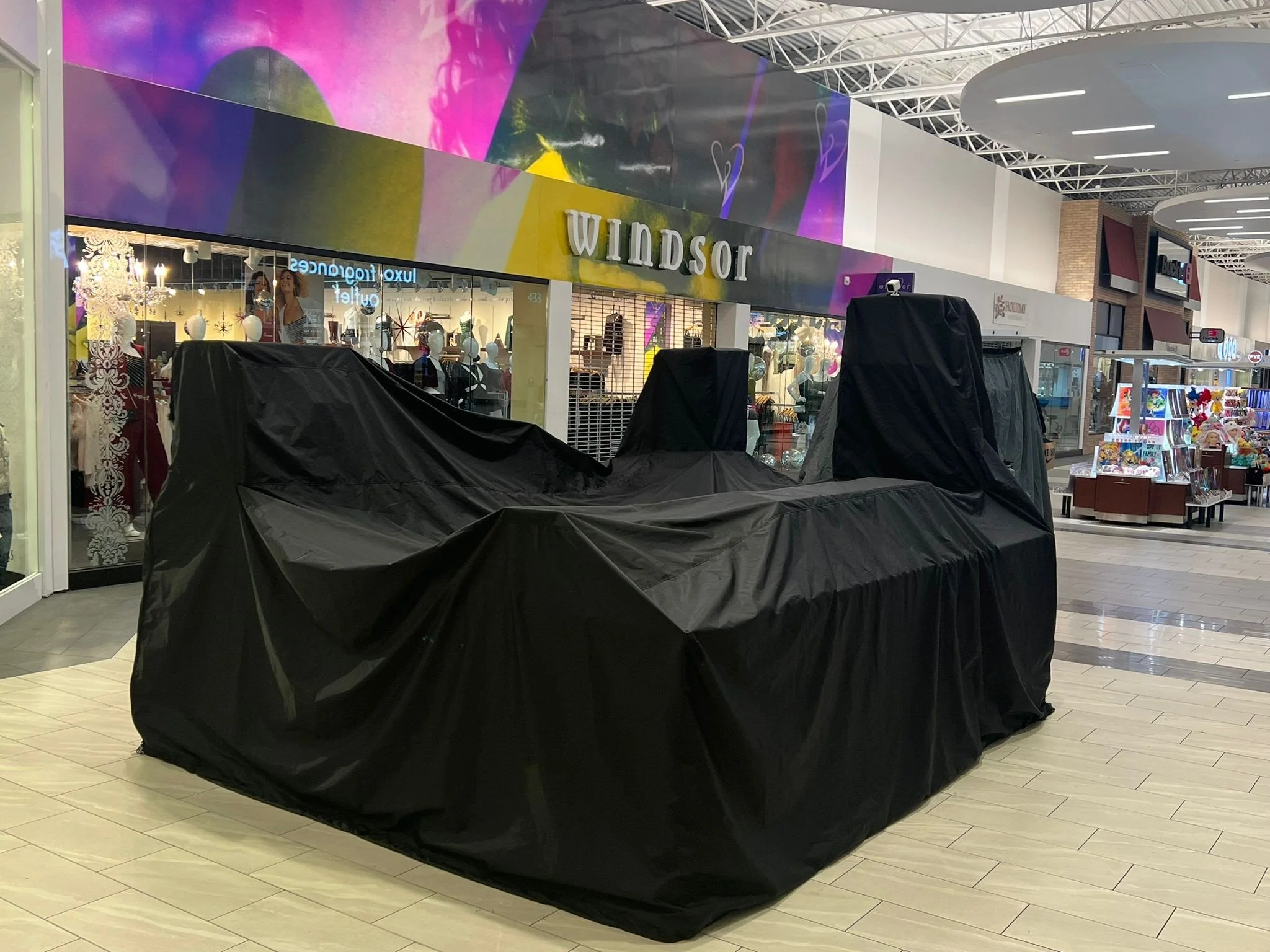
Mall kiosks and RMUs come in a variety of different shapes and sizes. Ultimately, no cover solution is going to suit all of them, unless the cover is custom-made to fit the kiosk itself. A kiosk cover must do more than just fit over the top of the unit—it should also account for dimensions, configuration, environment, security needs, and the needs of day-to-day usage as well.
A poorly specified cover can lead to all types of issues, like a bad fit, overly difficult installation, and unnecessary wear and tear. Before you place your custom kiosk cover order, read the following article to ensure that you are not making any of these 7 common custom mall kiosk cover mistakes. In addition, we’ll give you a good idea of what information to provide as well as where to find a cover manufacturer that will meet your needs.
#1: Not Measuring Your Kiosk Correctly for a Custom Cover
Every custom-fit cover, whether for a mall kiosk or RMU, begins with accurate dimensions. The difference of just a few inches can determine whether you’ll get a well-fitting cover or one that sags and does not protect your kiosk the way it should. That’s why getting the right measurements is essential to ensuring that your cover will not only look good and function the way it’s meant to, but that it will also protect your kiosk properly.
If you’re not comfortable measuring your mall kiosk or RMU yourself, finding manufacturer’s line drawings is a great alternative that can still provide a custom cover manufacturer with all the details they need to create a well-fitting design. However, if there are no line drawings available or those that you’ve found are inaccurate due to configuration differences, use the following process to measure your kiosk:
Measure the highest, longest, and widest points. This will give you basic dimensions; format them as Length x Width x Height when you send them to your custom cover manufacturer.
Take note of anything that will change the way the cover sits on the kiosk itself, including counters, shelving, mounted signs, or other features that extend from the main structure. Ensure that you measure those as well, so your cover manufacturer knows how to account for the length, width, and height of each feature.
Provide measurements along with accurate photos or drawings of the kiosk itself. This gives the cover manufacturer a better understanding of how different dimensions and features relate to one another and helps to identify fit issues before production.
For a custom mall kiosk cover, accurate measurements are the foundation of good fit and function. Getting this step right is the most important part of the quoting and design process.
#2: Not Accounting for Access Points, Cutouts, and Special Features
A kiosk or RMU cover is more than just a drape that shows that a kiosk is off-limits during the overnight hours—it also needs to account for more than just the overall dimensions of the unit. Payment terminals, handles, electrical connections and cords, displays, and shelving can all affect the cover’s fit and function.
Even if these features do not need to be accessible while the cover is installed, they still need to be identified before the cover has been designed and gone into production. The location and shape of these special features can affect how the cover is constructed, how easily it can be installed and removed, and where seams, closures, openings, and zippers should be placed. For instance, when we worked with Brainfreeze to design their custom mall kiosk cover, they wanted their sign to still be visible, even with the cover on.
Trying to account for these details after the cover has already been manufactured can lead to unnecessary modifications or a cover that fits improperly. When you identify these special features during the design phase, you’ll have a much better chance of getting a cover that fits the way that it should.
#3: Not Providing Accurate Photos or Drawings of the Kiosk or RMU

Measurements can give a custom cover manufacturer an idea of how big the kiosk or RMU is, but they often cannot communicate what the overall shape is. Visual references help to provide context for the dimensions; when they are available, please provide:
Clear photos from multiple angles (front, side, and back)
Photos demonstrating unusual shapes or protrusions
Close-up photos of areas of interest, such as the special features mentioned above
Good reference information not only makes the design process easier for the cover manufacturer, but it also helps to reduce the amount of back-and-forth necessary to create the cover itself. If the manufacturer has a good idea of how the kiosk or RMU is shaped, they will be able to better design a pattern that suits it before production has ever started.
#4: Waiting Until the Last Minute to Order a Kiosk Cover
When you’re ordering a cover that’s manufactured completely custom, there’s bound to be some wait time, which is why it’s so important to order before the need arises. For instance, when the holiday season rolls around, many malls and shopping centers realize that they need covers to protect RMUs and kiosks from tampering. Lead times will vary wildly from manufacturer to manufacturer, with some needing up to 10 weeks to manufacture a single custom cover, so it’s important to ensure that you have your cover before it’ll be needed.
The goal isn’t to order the cover months and months in advance. Instead, think about building the cover into the project timeline, rather than treating it as the last or least important item on the list. Giving the manufacturer enough time for design, approval, and production helps keep the cover on schedule with the rest of the project
#5: Choosing the Wrong Fabric for Your Kiosk Cover
Material selection can make or break your mall kiosk or RMU cover. This is one of the most common mistakes we see—kiosk owners or mall leasing managers choosing a material based purely on look, feel, or price, not function.
When you choose appropriate materials for your custom cover, your kiosk will not only be well-protected, but your cover can also last for years to come. However, if you end up with materials that aren’t appropriate for your end-use, such as an indoor-rated fabric in an outdoor environment that’s exposed to the elements, your cover may not last as long as it should. That’s why it’s so important to select the material based on the environment and how the cover will be used, not just simply based on the price or appearance.
An experienced custom cover manufacturer can help you narrow down material options based on the kiosk’s environment and cover performance needs.
#6: Not Thinking Enough About Security
Unlike traditional storefronts, many kiosks and RMUs lack walls, making security an important consideration because there is no simple way to lock up merchandise at the end of the day. A well-designed cover can solve this problem by making the kiosk less accessible and less visible when the mall or shopping center is closed for the night. If additional security features are needed, lockable closures can be included in the cover design to help keep it in place and limit access to what is underneath.
However, many kiosk owners and mall leasing managers may not be thinking about security when they purchase a cover, and this is where mistakes are often made. If they’re just ordering a cover to keep dust and grime off of the kiosk or RMU, it makes sense that security is not at the forefront of their minds—but if the cover is meant to protect from tampering and theft, a lockable closure is an important design consideration to keep in mind. Be sure that you make it clear to your cover manufacturer what the purpose behind the cover is before production begins.
#7: Assuming All Kiosks of the Same Model Are Identical
Not all kiosks are made alike. From different configurations to the varied placement of shelving and displays, even kiosks from the same manufacturer and model line may differ significantly from another. Two units with the exact same model number may have diverging features and dimensions that will determine how the cover needs to fit.
A custom kiosk cover should be designed around the actual kiosk that’s being covered, rather than relying on a model number or other standardized template. This is why it’s a good idea to provide current measurements, photos, and other details about any modifications. This will give the custom cover manufacturer a better understanding of the specific unit, rather than just general information that may not be entirely accurate.
What to Provide Your Kiosk or RMU Custom Cover Manufacturer
Before requesting a quote, have these ready:
Accurate kiosk dimensions
Photos from front, side, and back
Line drawings if available
Information about any special features or additions
Information about the kiosk's environment
Security requirements
Quantity needed
Desired installation date
Equip, Inc.: Your Choice for Custom Covers
Since 1999, Equip, Inc. has provided malls, shopping centers, and other high-traffic areas across the United States with custom covers to protect their equipment. We understand how varied and multifaceted RMUs and mall kiosks can be, which allows us to design our covers based on what they will be covering and how they will be used.
Contact us for a free quote today.
Avoiding These Mistakes Will Lead to a Better Kiosk Cover Overall
A mall kiosk cover that fulfills its purpose starts with a deep understanding of the kiosk itself, from its dimensions and shape to any special features or modifications that have been made to the original plans. When you avoid the above mistakes, you’ll end up with a cover that fits correctly and works well for the people using it.
FAQs
-
To design and manufacture a custom kiosk cover, a cover manufacturer needs the following information:
Photos of the unit (front, side, and back) or accurate line drawings from the manufacturer
Dimensional information (Length x Width x Height)
Info about special features or additions to the unit
Security requirements
Quantity needed
-
No one fabric is going to fit every application when it comes to mall kiosk covers. To determine the best fabric, cover manufacturers will ask questions about environment and end use. A cover made for a kiosk located indoors year-round behind locking doors will typically use a different fabric than one that is exposed to the elements, even seasonally.
-
Yes, a mall kiosk cover can be made to accommodate payment terminals, signage, and other equipment, as long as the cover manufacturer knows about it in advance.
-
Yes, a mall kiosk cover can be made with locking closures that allow the entire cover to be secured.
Order Your Kiosk Cover Today
Don’t forget to protect your investment with a lockable kiosk cover today.
📧 Email: info@equipinc.com 📞 Call: 719-599-0300
Request a quote today and keep your assets covered, protected, and ready for anything.